Gradsko setaliste bb, 32000 Cacak
+381 32 342 360
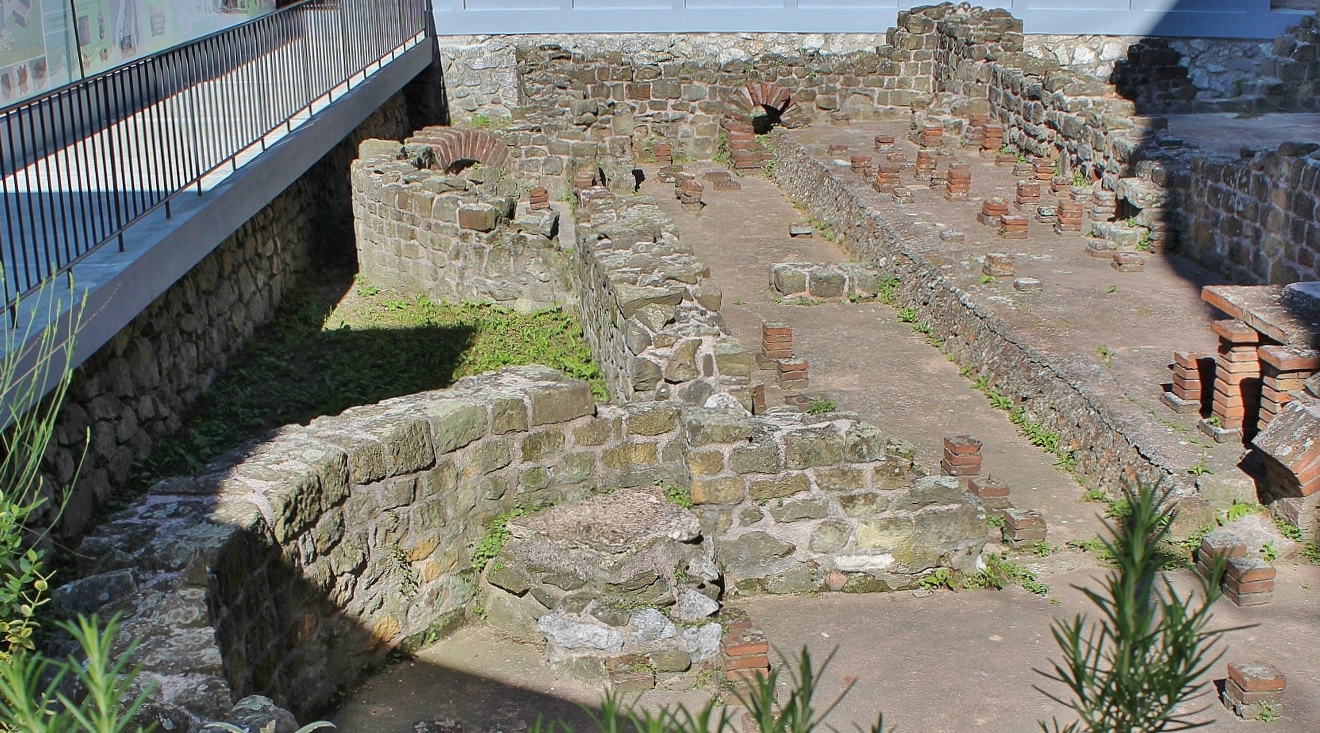
Remains of a building from the Roman epoch were unearthed during the excavation of the foundations of a residential and commercial building in the center of Čačak, in the area between Gospodar-Jovanova Street and Gradsko šetalište, behind the "Beograd" hotel and close to Cultural Centre and about 200 metres south- southwest of the National Museum. The name “Roman Bath” would soon become well-known in professional circles as well as on tourist maps. The site of the Roman Bath in Čačak was declared a cultural monument ("Official Gazette" No. 126 of 14.04.1970) and is managed by the National Museum in Čačak. Dating back to Late Antiquity period, the Roman Bath in the center of Čačak was built on a raised river plateau, with a slight southeast incilne.

The memorial commemorating the Hadži-Prodan Uprising is located in the southern part of the church gate in Trnava. It is made of white marble in the form of a developed flag with a cross on the top. The monument features relief group figures in motion. At the head of the group is hegumen Paisius, followed by Hadži-Prodan and the rebels in a slightly shallower relief. The author of the monument is Leposava Milošević-Sibinović, an academic sculptor from Belgrade..
The memorial dedicated to the warriors of four religions was erected and consecrated in 1934. In the ossuary underneath the memorial are the bones of Serbian warriors, lying side by side with their adversaries whose lives also ended here during the seven years of the war.
In the years following the war, the women’s section within Fidak (association of reserve officers and warriors) came forward with an initiative to erect a common memorial ossuary in the Cacak cemetery, and the initiative came to realization with the help of the Ministry of Justice. The new burial site received the posthumous remains of 918 soldiers, 652 of whom were Serbian warriors, including 109 from the region of Cacak and 96 from the region of Rudnik, while the remaining were from many different parts of Serbia.
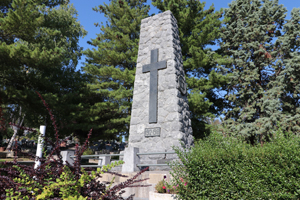
Based on the design prepared by Isidor Janjić, engineer from Cacak, the local master stone mason Frančesko Berbelja built a blue stone pyramid above the ossuary. The four sides of the memorial feature four different insignia made of granite stone: the Orthodox cross, the Catholic cross, Islam crescent moon and the six-pronged Jewish star.

The memorial complex on Ljubić hill is dedicated to the warriors and events from the liberation wars of Serbia in the 19th and 20th centuries. The main and oldest monument of this complex was partly erected in 1938 and is dedicated to the 1815 battle of Ljubić, with a special emphasis on the feat of Tanasko Rajić. The author of the project was the sculptor Milovan Krstić.
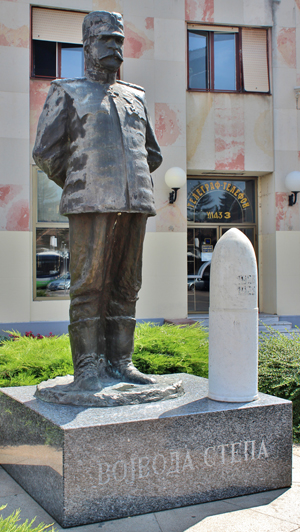
The Field Marshall Stepa Stepanović memorial is located in front of the post office in Čačak. The field marshall’s standing figure is 245 cm high and faces the house where he lived. From the monument to the house leads a line of plaques commemorating the battles in which Stepa Stepanović participated. The monument was erected during the lifetime of the celebrated military commander, with a fence consisting of stone obelisks in the shape of cannon shells inscribed with the names of the victorious battles. Memorial ossuary to fallen soldiers in the Čačak region 1912-1918 - "Monument to the Four Faiths" The monument to the soldiers of the four faiths was erected and consecrated in 1934. Underneath the stone memorial, dead Serbian soldiers rest together with their adversaries whose lives also ended here during some of the seven war years. In the post-war years in Čačak, the local group of the Fidak (Association of Reserve Officers and Soldiers) started the initiative to erect a joint memorial ossuary at the Čačak cemetery, which was done with the help of the Ministry of Justice. The remains of 918 soldiers, of whom 652 were Serbian soldiers, from the Čačak region (109), the Rudnik region (96) and all other districts in Serbia, were laid to rest in the new tomb. Above the ossuary, according to the idea of the Čačak-born engineer Isidor Janjić, the local stonemason Francesco Berbelja crafted a pyramid made from blue granite stone. On its four sides, the memorial features four different emblems made of granite: an Orthodox cross, a Catholic cross, an Islamic crescent moon and a Jewish six-pointed star.
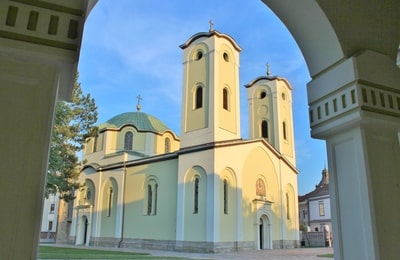
The church is located in the very center of Čačak. The founder was Prince Stracimir, brother of the gand prince Stefan Nemanja. The temple was built from 1180 to 1190. The base of the church is rectangular, 29.75 m long. Architecturally, it is a very spacious temple with a three-part altar space on the eastern side, with bell towers and a high central dome whose span is almost 12 meters. In the course of history, the church had been partially demolished by the Turks and converted into an Islamic place of worship, but the Serbs persistently restored it. The first restoration was carried out in 1834, and the second, much more extensive, in 1856. The external appearance of the temple was radically changed. The belief that the Baroque style did not suit the old Čačak church initiated a new restoration in order to return it to its medieval form. Samples were sought in the old Raška temples.
During an excavation, old bells were found buried in the ground near the church. On one of them, an inscription in Old Slavonic was discovered, which says that the bell was donated by the Metropolitan of Gradac, Nikifor, and on the other that the bell was a gift to the Most Holy Theotokos of Gradac from 1454. The bell is one of the oldest in Serbia.
The treasury of the Čačak church contains several old manuscripts. The most important is the Four Gospels, known in schientific circles as the “Čačak Gospels”. The most important in the collection of icons is the Virgin Hodegetria with Christ. It is the work of an unknown painter from the 16th century, with a beautiful frame. The large representative ensemble of the iconostasis owes its decorativeness to the capable master woodcarver Nikola Janković. It is a wealth of carved plant friezes with silver and gold foils.
According to recent research findings, the central part of the temple had a standard square base and the traditional spatial structure of the inscribed cross. Its unique design of the inner space and the monumental dimensions make the temple one of the most beautiful structers of its era.
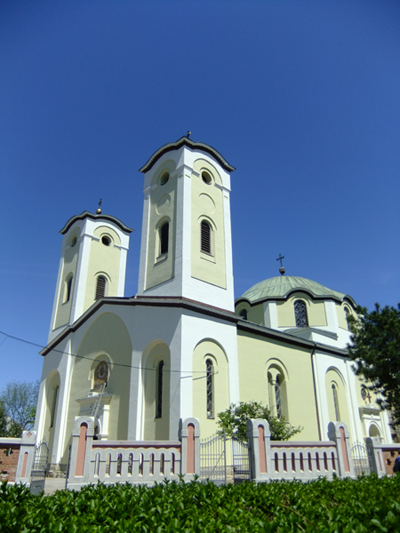

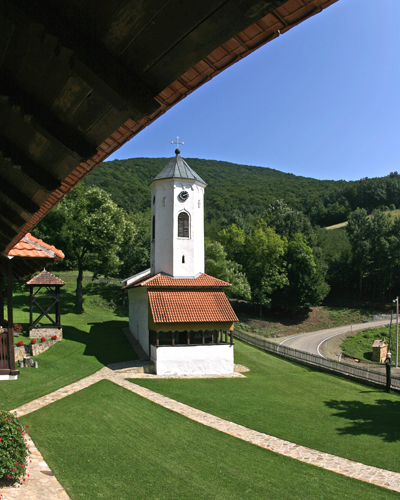
Ježevica Monastery is located in the village of the same name, 11 km away from Čačak. According to tradition, the temple is an endowment of King Milutin. The monastery was often demolished during Ottoman occupation, only to be repeatedly rebuilt by the Serbian people..
The Stjenik Monastery is located at the foot of the Jelica mountain. Originating from the Middle Ages, the legend has it that the monastery was built by the Mrnjavčević brothers before the Battle of Marica. The relics of St. John Stjenički who was executed by the Turks in 1802 are kept in the monastery. Near the monastery, under a large rock, is a well-known spring of warm water. For centuries, the people have respected the source and the relics, believing that they have healing powers.
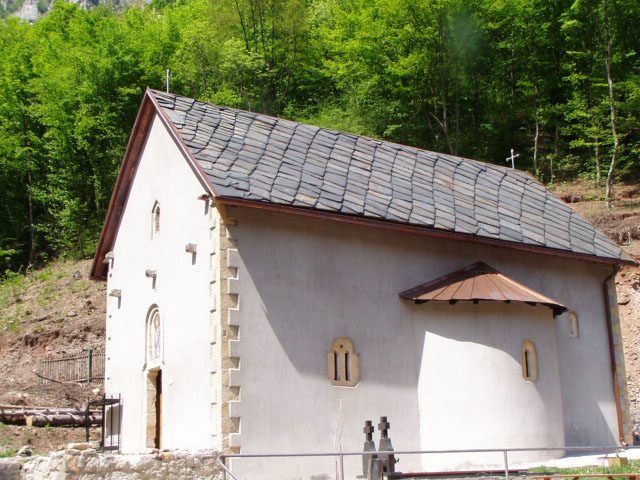
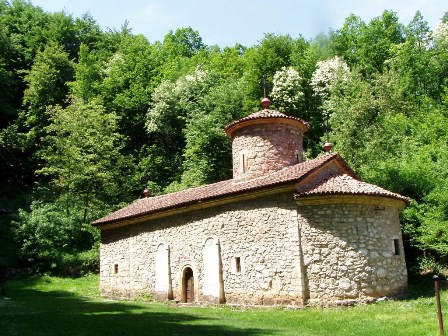
The Vujan Monastery is located 6 kilometers from Čačak, on the slopes of the Vujan mountain. Dedicated to the holy Archangel Michael, the monastery is a protected site of outstanding cultural and historic value. It is supposed to have been built in the 14th century. The legendary fighters against the Ottoman occupation in the First and Second Serbian Uprising, dukes Lazar Mutap and Nikola Lunjevica, are buried in the monastery cloister.
The Vujan monastery lies at a distance of 6 kilometres from Cacak, on the slopes of the Vujan mountain. Dedicated to Archangel Michael, the monasetry is a protected cultural and historic site. It is supposed to have been built in 14 th century. The narthex of the monastery church is the burial site of the legendary warriors during the First and Second Serbian Risings, Lazar Mutap and Nikola Lunjevica.